

Bohemian architecture (often called Boho style) brings a free-spirited, artistic, and globally inspired aesthetic that fits surprisingly well in the Caribbean context. It celebrates creativity, cultural fusion, and relaxed tropical living — all of which naturally align with the island lifestyle.
Let’s unpack this fully.
1. What Is Bohemian Style Architecture?
The Bohemian (Boho) architectural style is rooted in individual expression, global influences, and relaxed informality.
It grew out of 19th-century European artistic communities — especially in Paris and Prague — and evolved into a design language that celebrates freedom, color, texture, and the blending of cultures.
Architecturally, it’s less about symmetry and formality and more about comfort, creativity, and natural beauty.
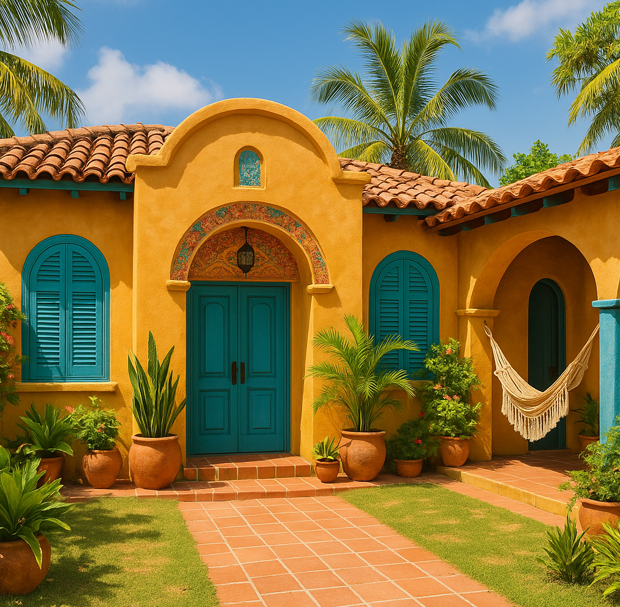
Think: hand-painted walls, arches, lush courtyards, and homes that feel collected over time.
2. Why Bohemian Design Fits the Caribbean
The Caribbean already embodies many of Bohemian design’s key principles — openness, color, cultural blending, and connection to nature. Integrating Boho elements helps create homes that are expressive yet sustainable, cooling naturally through flow and material choice.
Here’s why it’s a perfect match:
| Bohemian Design Value | Caribbean Parallel |
|---|---|
| Relaxed, lived-in comfort | Easy, breezy island living |
| Eclectic mix of influences | Blend of African, European, and Indigenous heritage |
| Natural materials & handcrafted textures | Local timber, rattan, clay, and tropical textiles |
| Outdoor connection | Verandas, courtyards, ocean-view terraces |
| Layered colors & art | Bright cultural expression found in Caribbean art and crafts |
So, in essence — Caribbean Bohemian architecture feels like an organic evolution of island life: artistic, nature-based, and culturally rich.
3. Key Architectural Features of Bohemian Style
a. Organic, Asymmetrical Form
- Boho homes avoid rigid layouts — instead, they use curved walls, arched doorways, and irregular volumes.
- Designs feel evolved over time, not machine-made.
💡 In Caribbean use: Soft curved corners reduce heat buildup and encourage air circulation — practical and poetic.
b. Natural & Local Materials
- Stone, brick, timber, bamboo, rattan, and terracotta dominate.
- Handcrafted finishes like plaster, textured stucco, or limewash give warmth and tactile quality.
💡 Caribbean adaptation: Use coral stone, hardwoods (teak, mahogany), and locally woven bamboo panels.
c. Layered Spaces & Airflow
- Open, interconnecting rooms with visual “layers” — fabric drapes, arches, indoor plants.
- Cross-ventilation is a must: wide openings, tall windows, and inner courtyards.
💡 In Caribbean climate: This creates natural cooling without full dependence on AC.
d. Vibrant Colors & Artistic Detail
- Earthy base colors (ochre, clay, cream) layered with vivid accents — turquoise, magenta, indigo, coral.
- Decorative tiles, murals, mosaic work, or hand-painted trims.
💡 Caribbean synergy: Matches island palettes — bright shutters, sun-washed walls, mosaic borders.
e. Mixed Cultural Influences
- Boho architecture borrows from Moorish, Moroccan, Mediterranean, Indian, and Tropical design styles.
- The emphasis is on cultural storytelling through design.
💡 In Caribbean design: Blend local craftsmanship with global flair — e.g., Moroccan lamps with Trinidadian fretwork or Jamaican driftwood art.
f. Indoor-Outdoor Continuity
- Courtyards, rooftop terraces, garden nooks, and verandas blur boundaries.
- Large openings invite nature inward — framed by curtains, pergolas, or trellised vines.
💡 Caribbean bonus: Enhances connection to the sea breeze and tropical gardens.
g. Sustainable & Mindful Design
- Reuse, repurpose, and recycle are key — furniture and decor often handcrafted or upcycled.
- Architecture emphasizes natural light, ventilation, and low-impact living.
💡 Caribbean approach: Incorporate solar panels, rainwater harvesting, and natural shading with vines or bamboo screens.
4. How to Apply It in Caribbean Homes
Here’s how to translate Bohemian style into Caribbean architectural design:
| Element | How to Apply |
|---|---|
| Structure | Use simple single-storey or split-level forms with irregular shapes and verandas. |
| Materials | Mix local wood, exposed stone, and painted plaster. |
| Roofing | Use wide-eaved hip roofs with clay tiles or thatch for shade. |
| Windows & Doors | Arched, louvered, or repurposed wood shutters painted in bright hues. |
| Color Scheme | Combine natural tones (ochre, sand, white) with ocean-inspired accents (aqua, coral, green). |
| Outdoor Spaces | Include hammocks, patios, and shaded decks surrounded by lush tropical planting. |
| Interior Finishes | Add macramé, woven textures, local paintings, and globally inspired fabrics. |
💡 Design tip: Layer simplicity + story + texture.
Bohemian homes tell personal narratives — each object and color has a meaning.
5. Feng Shui & Energy Alignment
Interestingly, Bohemian style aligns naturally with Feng Shui because:
6. Summary: The Boho-Caribbean Blend
| Principle | Expression in Caribbean Context |
|---|---|
| Freedom & Creativity | Personal touches, colorful accents |
| Connection to Nature | Lush verandas, natural airflow |
| Cultural Fusion | Mix of island craft and global art |
| Sustainability | Use of local, organic materials |
| Emotional Warmth | Inviting textures, handmade elements |
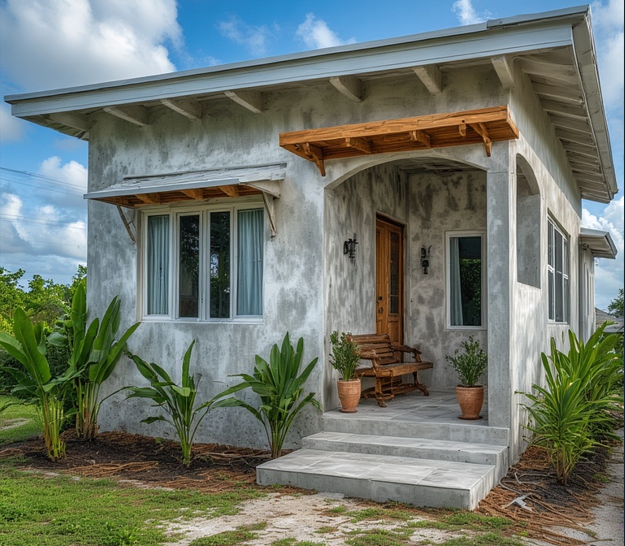
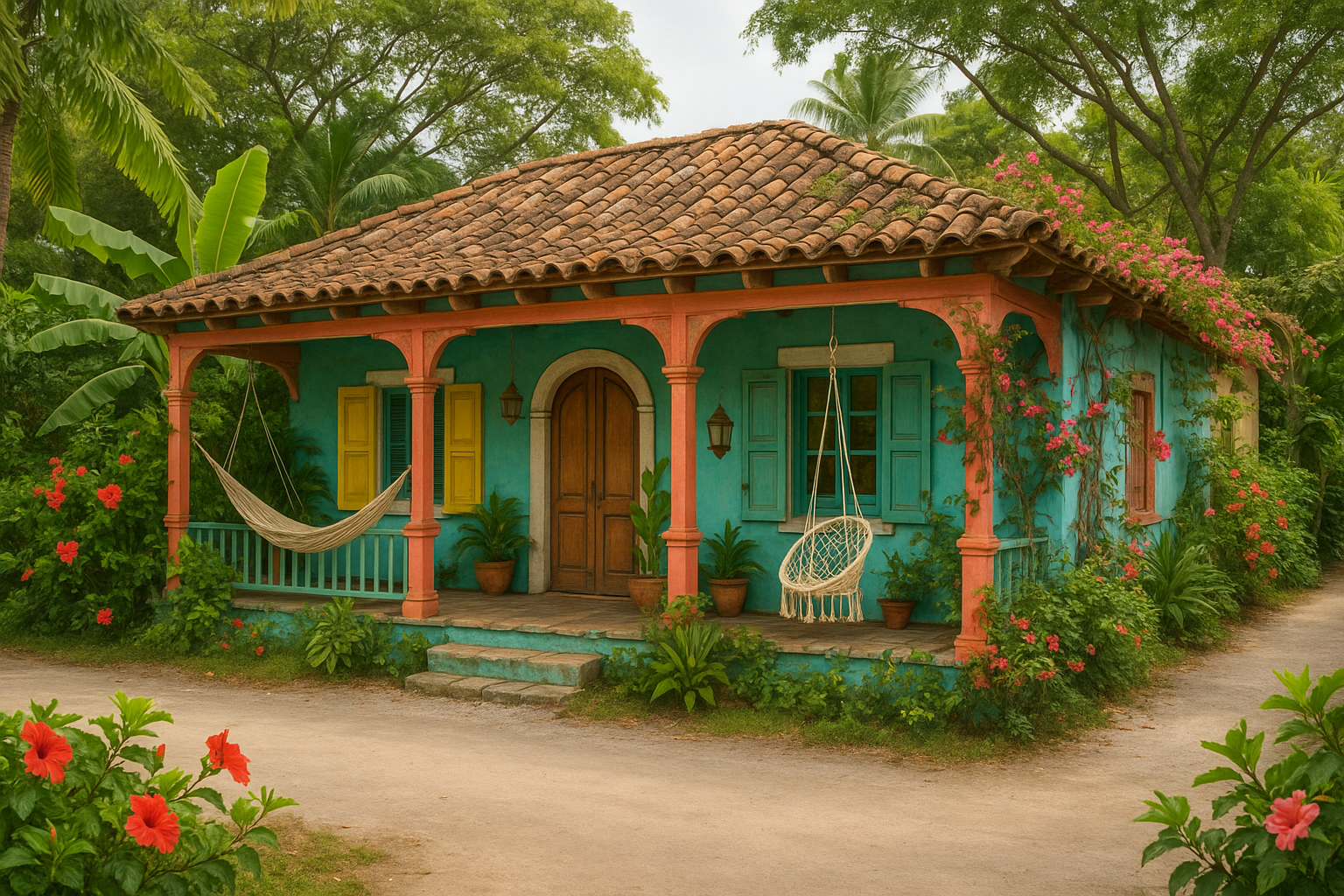
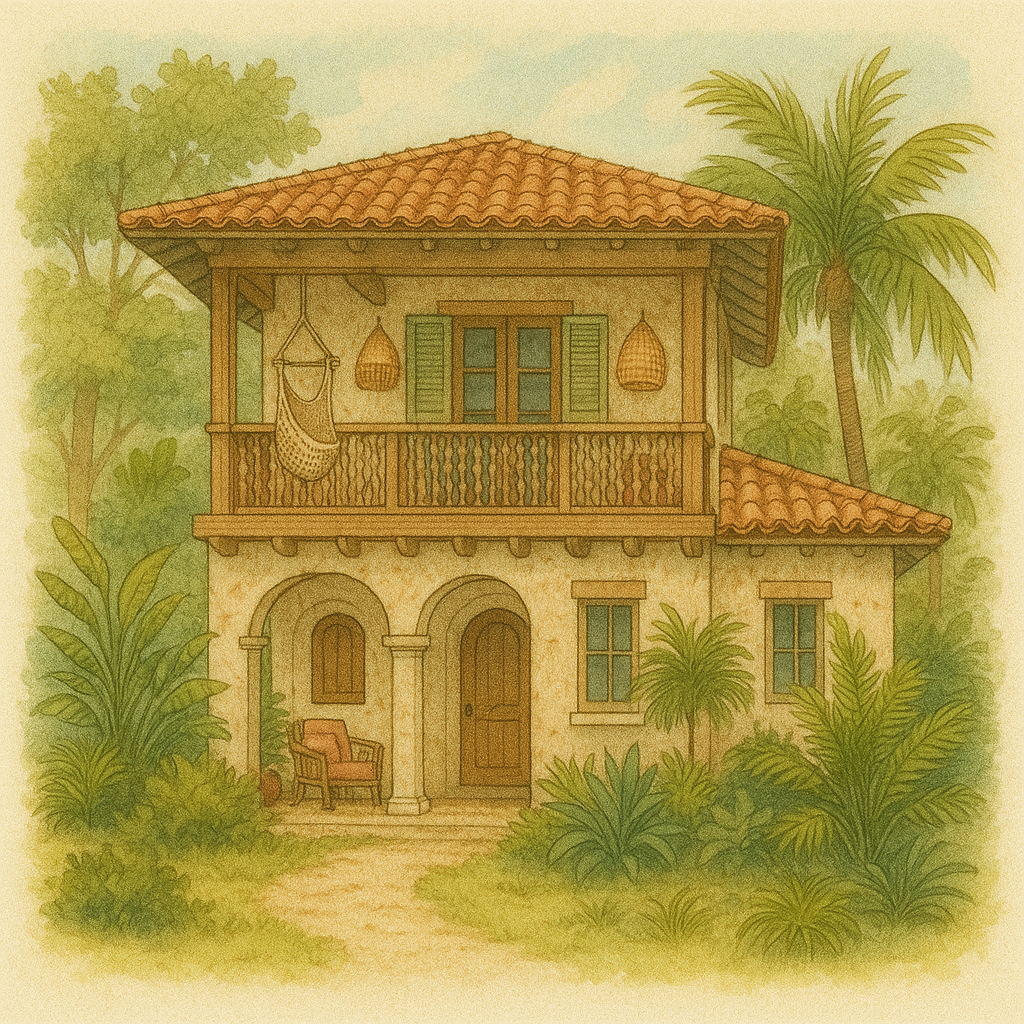
Here are some more examples of homes inspired by the Bohemian Tropical Design Style. Click on the links provided below.
MORE ARTICLES
-

10 Ideas designed for a Caribbean Tropical Home
These ideas are designed for a Caribbean tropical home, where the emphasis is on natural materials, breezy spaces, vibrant foliage, and seasonal changes that fit the local climate rather than four distinct temperate seasons. 1. Tropical Spring Refresh To create a refreshing ambiance in a Caribbean tropical home, the concept of a “Tropical Spring Refresh”…
-

How to Make Your Own Bubble Diagram
A bubble diagram in architecture is a quick, loose way of planning how spaces relate to each other before you start drawing walls, doors, or exact dimensions. Think of it as the logic underneath the floor plan. Instead of drawing a bedroom as a precise 12′ × 14′ rectangle, you draw a bubble labelled Bedroom.…
-
Remedies for Slopes, Corners & Sharp Angles
In the realms of architecture and feng shui, a significant overlap exists in their fundamental principles, despite the different terminologies used. Feng shui emphasizes the concept of “chi,” which refers to the vital energy that flows through spaces, affecting the well-being of individuals. Architects, on the other hand, focus on aspects such as circulation, sight…