
When designing an outdoor shower and spa area, incorporating essential features is key to maximizing both comfort and functionality. We will first start with the materials, after all you’re building something that can feel like a quiet, high-end retreat – not a cheap rinse-off. The difference is almost entirely in the materials you choose—especially in a humid, tropical environment.
This article with start with the structure then the we will discuss the surfaces and finally the fixtures. We will finish off with the spa elements.
1. Core Structure (Frame + Enclosure)
Hardwood / Natural Enclosures
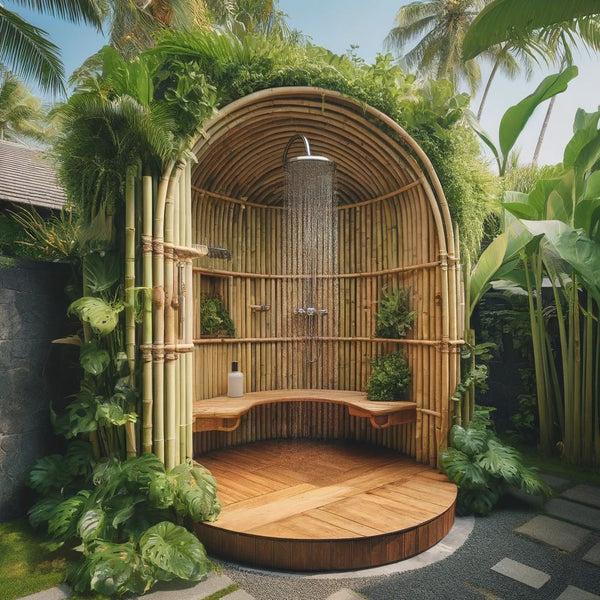
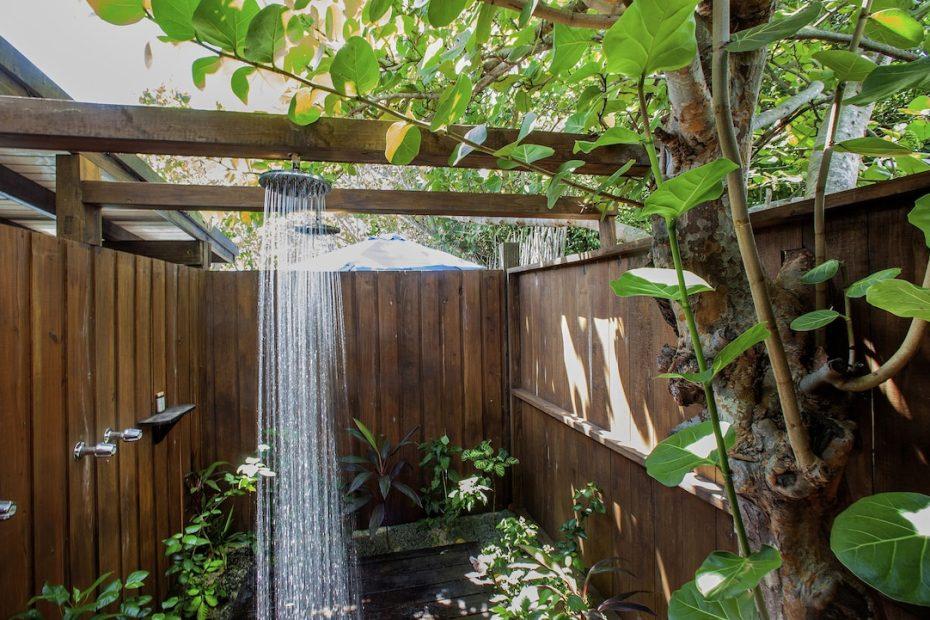
Best options:
- Teak (premium) – naturally oily, resists rot, insects, water
- Cedar / Cypress – more affordable, still rot-resistant
- Bamboo – aesthetic, tropical, but shorter lifespan
👉 Why it works:
- Natural oils resist decay and insects
- Feels warm, organic, spa-like (important for your “quiet luxury” direction)
⚠️ Reality check:
- Wood = maintenance (oil/seal yearly)
- If you want “install and forget,” don’t rely only on wood
Alternative (Low Maintenance)
- Composite decking panels (PVC/HDPE)
- Powder-coated aluminum frames
👉 These resist rot, UV, and moisture with almost zero upkeep
2. Flooring (This is where most people mess up)
Natural Spa Flooring
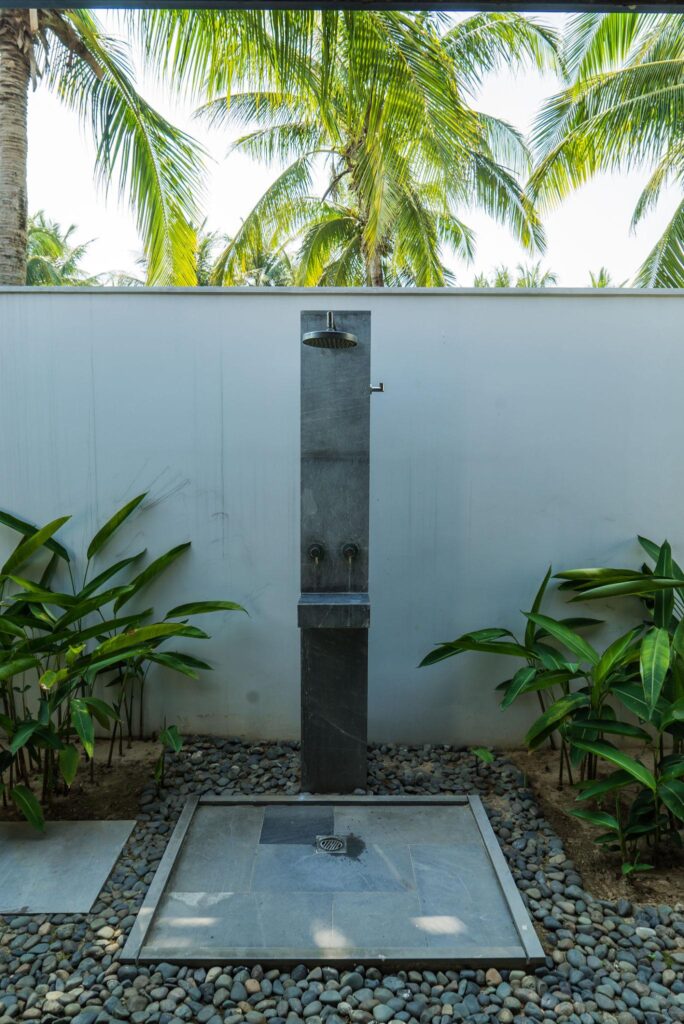
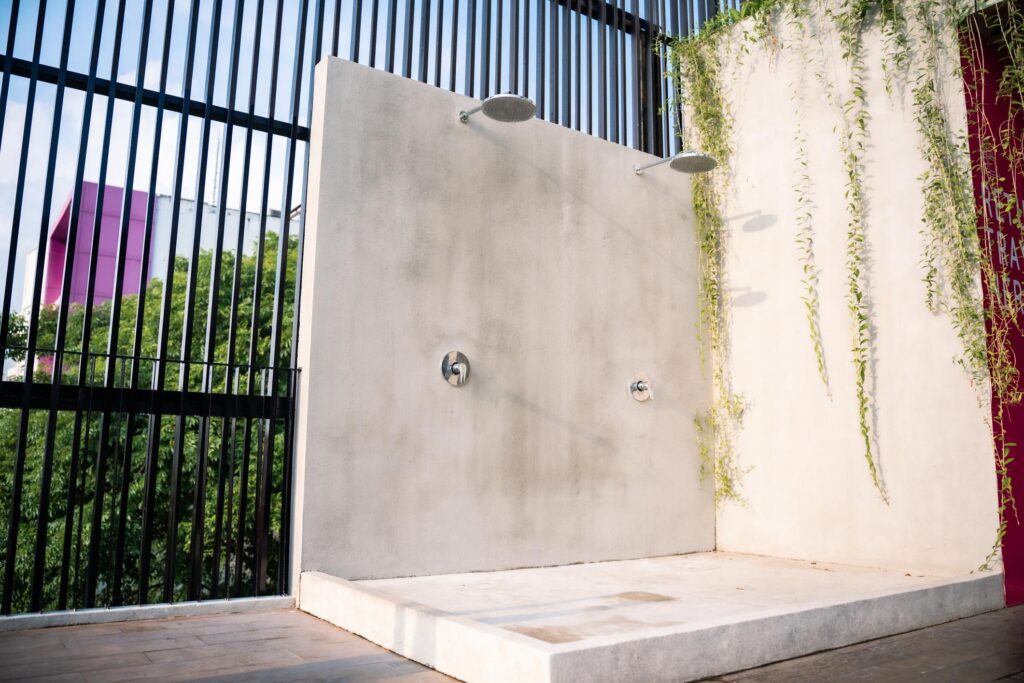
Best choices:
- River pebbles (gravel bed) – best drainage + massage feel
- Natural stone pavers – durable + premium look
- Teak slatted deck (duckboard) – classic spa feel
- Concrete (brushed or textured) – modern, durable
👉 Why it matters:
- Must drain well + be non-slip
- Stone, timber decking, and pebble beds are commonly used for both function and aesthetics
💡 Pro tip (don’t skip this):
- Slight slope + gravel soakaway = no standing water
3. Fixtures (This is your “engine”)
Metal Fixtures (Critical choice)
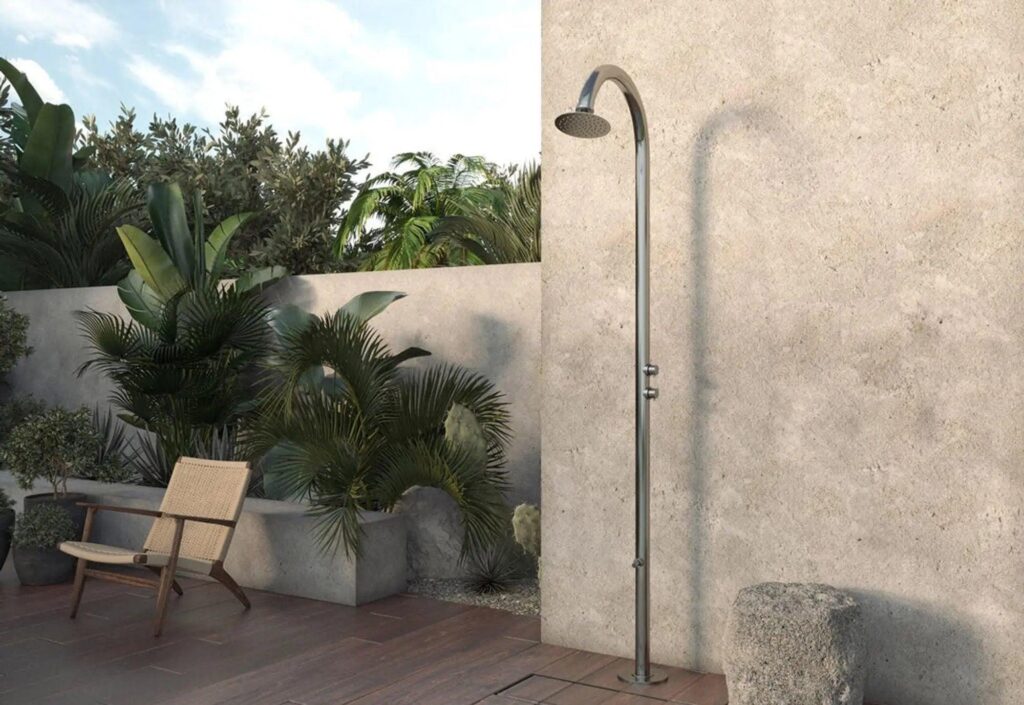
Best Overall:
- 316 Marine-Grade Stainless Steel
- Rust-proof (even near salt air)
- Handles humidity + chlorine
- Lowest maintenance
Alternatives:
- Brass – warm, luxury look (needs upkeep)
- Copper – develops patina over time (intentional aged look)
👉 Truth:
If you’re serious about longevity → go stainless steel. Everything else is aesthetic trade-offs.
4. Walls & Surrounding Materials
Mix materials to get that spa feel:
- Natural stone walls (volcanic / slate / coral stone)
- Rendered concrete + limewash
- Wood slats + greenery
- Living walls (plants for privacy)
👉 The best outdoor spas combine hard + soft textures:
- Stone + wood + plants = balance
5. Spa Elements (This is what separates average from premium)
Add these deliberately:
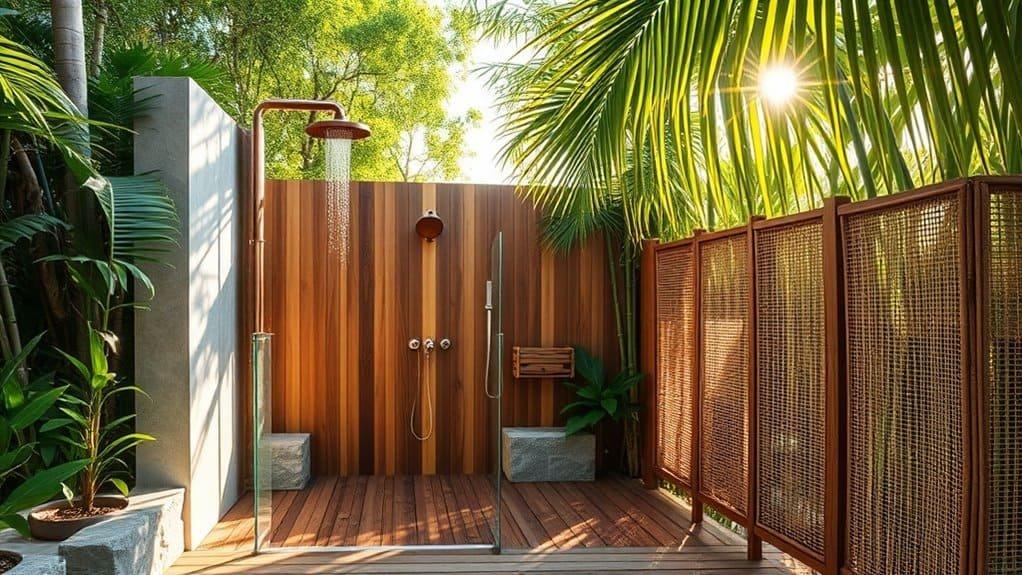
- Built-in stone or teak bench
- Rainfall shower head
- Hidden LED warm lighting
- Small niche shelf (clean, not cluttered)
- Surround with tropical plants (heliconia, ferns, bamboo)
👉 This is where it becomes a ritual space, not just plumbing.
6. Best Material Combo (Simple + Powerful)
If you want a no-fail system, use this:
- Frame: Aluminum or hardwood
- Floor: Pebble + concrete base
- Fixtures: 316 stainless steel
- Walls: Wood slats + plants
- Accent: Stone
👉 That combination hits:
- Durability
- Low maintenance
- Tropical aesthetic
- Spa feel
Straight Advice (No fluff)
In conclusion, when planning outdoor showers and spas, it’s essential to keep things straightforward to ensure a successful installation. Avoid overcomplicating your design with an excessive variety of materials; simplicity often yields the best results. Instead, focus on selecting high-quality fixtures, as opting for cheaper options can lead to early failures and frustrations. Investing in durable components will pay off in the long run, saving you the hassle of frequent replacements. Additionally, proper drainage is crucial; neglecting this aspect can lead to significant issues, including water pooling and damage to your outdoor space. By following this straightforward advice, you can create a functional and enjoyable outdoor shower or spa experience.